One Struggle, One Light: Animal Liberation, Human Rights

While millions of people seek food aid, we feed billions of farm animals.

Fish, dairy, meat and egg products take a huge toll on the planetary systems that sustain our lives.

Let’s be clear. We’re talking about all of animal agribusiness, not just factory farming.

The local, family-run farm betrays animals who trust their keepers. It exploits resources that could sustain hungry and thirsty humans. Its waste is largely unregulated simply because small farms (which are many, in the aggregate) slip through the cracks of federal environmental law. The development of local animal farms is a form of sprawl, no less than roadside malls and mini-marts. And animal farming involves the selective breeding, the purpose-breeding, of members of other living communities.

There is no fair animal farming business.

Nor is animal ag conducive to social fairness among human beings. Animal ag on every scale contains gruesome work. While we don’t want to see how the sausage is made, someone has to make it for so long we demand it. Those in the supply chain work long hours; some are migrants, housed in dorms to be ever-available.

Save for a handful of animal refuges, all animal farms sentence their nonhuman residents to death at some point. And that means some humans experience the repetitive and ghastly trauma of the killing floors. A more privileged class need never witness the sausage being made.

Veganism responds to urgent food security and social justice needs. If it can’t solve world hunger, at least it can drastically reduce it. And in a time of global climate breakdown, high-protein, drought-resistant pulses such as lentils are making a comeback.

As a principle, veganism holds that humans are one community among many, not the very point of Earth’s existence. Vegans relinquish the human assumption that the Earth (or any other planet) is ours. Consider how this enriches the human experience. It calls for a truce with, and maybe even a sense of contribution to, life on Earth that could not be experienced otherwise.

And here I’m getting into Jeffrey Moussaieff Masson’s urge to “go to the root of the trouble.” Jeffrey says:

I believe the single most dangerous idea of the human community is pseudospeciation—the belief that we are superior. This leads to depersonalization of “other” cultural groups within humanity, as it mimics our notion of dominion over all nonhuman life on the planet. If sustained any longer, it will surely undo us and much of the living world. How long can we cling to our illusory feeling of control that has already fashioned hominids into the most destructive presence the Earth has known? Yet there is hope; we do have the mental power to decide on the side of respect rather than exploitation. The point is to strive. The path ahead might not always look the same to you, to Lee, or to me as we contemplate this shared journey.

After noting the pain involved in acknowledging domestication as exploitation, Jeffrey says:

I would go even further: I would claim that humanity’s original sin lies in the domestication of animals.

Go to this linked page if you’d like to → hear Jeffrey say this aloud.

Photo source: Hladnikm (CC-BY-SA-4.0).

Environmental Law Is Losing the Plot. What Now?

The law fails to do what people aren’t ready to do. Yet Earth’s living communities can’t wait. They urgently need us to change. Whether we, the ultimate crafters of social hierarchies, acknowledge it or not, we can never alienate ourselves from the nature we destroy. So, what are we doing to reconcile ourselves to it?

Published in CounterPunch today. Read more here.

Revisiting MacKinnon’s “Of Mice and Men”

Catharine A. MacKinnon, Elizabeth A. Long Professor of Law at the University of Michigan, specializes in equality issues under international and constitutional law. MacKinnon pioneered the legal claim for sexual harassment, establishing it before the U.S. Supreme Court, and secured legal recognition of rape as an act of genocide.

In the 2004 essay “Of Mice and Men: A Feminist Fragment on Animal Rights,” Catharine MacKinnon explored the connection between misogyny and animal exploitation. MacKinnon’s book chapter continues to influence the way I understand animal liberation as the call for nonhuman animals to live on their own terms.

Our social norms signify that the integrity of nonhuman bodies does not matter. As female people have often been defined and valued in terms of the use of their bodies and their reproductive functions, feminism has a message for all liberationists.

Where is human disregard for other animals obvious? “The place to look for this bottom line,” writes MacKinnon, “is the farm, the stockyard, the slaughterhouse.”

Where is human disregard for other animals more subtle? For nonhumans and for women, Professor MacKinnon notes, the “denial of social hierarchy…is further supported by verbiage about love and protection” as though it mitigates the domination.

To take a stand where such deeply-rooted exploitation could be successfully challenged involves a journey deep into the psychology that leads to a human history of oppression and destruction.

A Unilateral Bargain

When we exert control over cats and dogs and horses, we pretend our vice is a virtue.

Maybe we don’t eat them, but they are nevertheless commodities, separated from their birth families at the discretion of buyers and sellers, to find comfort as long as their luck would keep them with people willing and able to feed and shelter them. At any time, the kind human owner might experience a reversal of fortune: family strife, divorce, illness, or death. Then what happens to these animals?

As for horses, many who pass their primes (or the primes of their owners) cannot evade the common chain of sale, resale or donation to charity, neglect, and finally slaughter. Horses die by the hundreds every year on racetracks, and still more die during vivisection on behalf of the racing industry. They’re subjected to other “sports” and sent into wars, ranching businesses, policing and social control.

Many people call the animals in their homes companions, even part of the family. But domestication was physically imposed upon the animal’s ancestors, their reproduction controlled over generations.

Once specific individuals are born into the human world, they need, and should receive, our protection and care. The point is that it was arrogant and violent to systematically turn wolves into dogs in the first place and caring does not mitigate that. What is true for women is true for wolves. Their rights must be on their own terms. As MacKinnon puts it: “Unless you change the structure of the power system you exercise, that you mean well may not save those you love.”

Crushing the Other

Pornography involving nonhuman animals is yet another appalling industry made possible by our systematic control over other beings. As MacKinnon writes, “Surely animals could be, and are, trained to make it appear that they are enjoying doing what people want them to do, including have sex with people.” But they have no way to opt out.

Then there’s the outright torture, such as that in crush videos. These and other examples of torture and killing of nonhuman animals have been defended on the grounds of artistic expression. As MacKinnon points out, similar arguments have been applied to defend imagery depicting the violent handling of women.

It is not surprising, given the U.S. Supreme Court’s placement of pornography into the “obscenity” category, that the debates focus on concerns over censorship. The real problem is the way we divide society into classes, perpetuating the use and humiliation of some by others. 

The best advocacy for nonhuman animals will serve as a model for respectful interaction between humans ourselves. But that doesn’t mean respect among humans is the only respect that matters. Lawmakers point out that violent treatment of nonhumans leads to desensitization, and then to violence against human beings. Such arguments imply that the abuse of nonhuman animals is taken seriously only insofar as intervention could potentially guard the human community from harm. That implication leaves human supremacy intact.

The Like-Us Trap

Some animal advocacy encourages popular interest in animal labs. The argument is that other animals have a lot in common with us, and we can prove it, so they should have some types of rights. Cognition studies are called non-invasive; yet the objects of analysis are detained, usually isolated. There is no sanctuary that can ever make up for their loss of freedom throughout their lives, while those who study them move up their career ladders — many being congratulated profusely for their published claims to have formed new bonds between humanity and other animals.

“[A]nimal rights are poised to develop first for a tiny elite, the direction in which the ‘like us’ analysis tends,” MacKinnon writes.

“[H]ow to avoid reducing animal rights to the rights of some people to speak for animals against the rights of other people to speak for the same animals needs further thought,” MacKinnon writes. Spot on. We’ve focused on who may suitably speak for owned nonhuman beings, rather than on how to withdraw from the habit of ownership itself.

When a chimpanzee died in an Atlanta laboratory after being used in HIV experiments, Professor Lawrence Tribe declared, “Clearly, Jerom was enslaved.” Tribe added that Jerom should have been treated “with respect” yet had no right to opt out of being enlisted “to save a human life, or achieve a higher goal.” The reporter who interviewed Tribe reassured readers: “In other words using chimps for medical research would remain possible.”

“People tend to remain fixated on what we want from them, to project humans onto animals, to look for and find or not find ourselves in them,” writes MacKinnon. The question for the animal rights theorist and activist is “what they want from us, if anything other than to be let alone, and what will it take to learn the answer.”

The Most Comprehensive Right

Supreme Court justice Louis Brandeis said the right to be free of public curiosity was rooted in something deeper than what a study of property rights could reach. Justice Brandeis wrote that “the right to be let alone” is “the most comprehensive of rights and the right most valued by civilized men.” [Olmstead v. United States, 277 U.S. 438 (1928) (dissenting).]

The right is valued not only by men, and not only by the civilized. 

Animal advocacy needs the filter MacKinnon’s feminist fragment provides. Much more work remains to be done before our society understands how the domination of any group affects all. Critically, animals are still property across the board. Serious animal advocacy, by working at the base of the hierarchy, will strengthen respect for all groups. We have something to teach all movements for social betterment, even though there are relatively few of us, so that we face great pressure to focus on “the animal question” specifically. The fewer theorists and activists are in this area, the more critical it is that we’re informed by (and inform) people who work in interrelated areas of social justice.

Love and liberation,

Lee.


Photo credit: 2.0 Generic (CC BY-NC-ND 2.0); by Coalition for the ICC via Flickr.

On Their Own Terms: Eighteen Nutshell Narratives

This is a narration of the 2016 book On Their Own Terms: Animal Liberation for the 21st Century, abridged and adapted for audio, and read by author Lee Hall in 2022.

Although quotations are left as they were written, this work is created with a commitment to gender-free language as far as possible.


Here’s One Audio File With the Combined Nutshell Narratives


And below is an index of links for each of the 18 nutshell narratives making up On Their Own Terms: Animal Liberation for the 21st Century in audio form. 

Feedback (positive, building-on, or critique) welcome. I’ll be listening to the combined, 1-hour-and-52-minute audio file now that it’s posted as one piece. If you find anything that could be clearer, let me know. The beauty of indy-publishing this is that glitches can be fixed!

NUTSHELL NARRATIVES (2022)

  • ABOUT THIS BOOK: “About This Book” lays out the book’s context and why it needs to exist. This is the first of a series of nutshell narratives putting each chapter into audible form.
  • FOREWORD by Dr. Jeffrey Moussaieff Masson: “Finding out about others without desiring to use or have them, intimidate or subordinate them may be the hardest thing of all for humans to do.”

PART ONE: TO CARE, AND TO BE FAIR

~* AN INTERLUDE OF GRATITUDE *~

PART TWO: TO LIBERATE 

APPENDICES

  • Appendix 1: A Liberation Workshop. If you believe the work of radical change starts with a written plan, here is a possible template.
  • Appendix 2: Making Vegan Guides and Leaflets. Thoughts on creating an intro to veganism for the vegan-curious.
  • Appendix 3: Veganism Defined. Updated language for the classic 1951 pledge of allegiance to our planetmates.

Liberation or Bust

For several years, I served on the board of Primarily Primates, a Texas primate refuge. During that time, I sponsored Lee, a Java (Long-tailed) macaque. Caged, tattooed, wearing a restraining collar, Lee had served as a model for toxic reactions to chemicals. The refuge removed the collar and sent it to me, together with this portrait photo.

A Java (Long-tailed) macaque who got out of the lab alive.

It’s not hard to imagine being a trapped macaque. Macaques are very much like us in their physical and mental responses. Should they have rights?

Arguably so. But several cases have been made for the personhood of great apes, and that line of advocacy has yet to pan out in any meaningful way. Imagine how long it would take to get to the case for macaque rights. And even if, by some miracle, we one day win rights for all of the primates of the planet, and even if those rights, by some miracle, receive international assent, what will the state of the biosphere be by then? Would our recognition of their personhood ensure that they, and the other beings of the edge of the forests, can live on their own terms?

It hardly seems possible. Respect is a tall order. In the literature of governments, Long-tailed macaques are called vertebrate pests. Translation: Humans dragged and dropped Java macaques around the world and now these primates pick crops out of our farms. 

In their native territories, Java macaques face continuing habitat loss. They are subjects of “culling due to human-macaque conflicts.” They are stalked to be eaten and for so-called sport. They are snatched and bred and sold into the international trade for research. They even have a laboratory trade name: cynomolgus monkey.

Restraining collar worn by macaques in the toxicology lab.

Because they gravitate to the edges of forests, they’re visible. In places such as Java, they’ve been presumed abundant. But everywhere they are, they’re stalked.

The late Ardith Eudey, who, with Shirley McGreal, founded the International Primate Protection League, and who for many years chaired the IUCN Primate Specialist Group’s Asia section, rang alarm bells about the severe threats to long-tailed macaques, including the trafficking of these primates to labs. The International Union for the Conservation of Nature did take note, reclassifying Macaca fascicularis from abundant to vulnerable. If we are entering a pandemic era, the quest for vaccines and treatments will continue to promote the lab primate trade, even as humans keep driving climate turmoil and expanding agribusiness, deforestation and sprawl. The primates of the forest’s edge do not have time to spare.

It’s All Connected: Earth Restoration; Animal Liberation; Human Rights.

And this is what animal liberation has to be about. Creating root-level sanctuaries: habitat where once-targeted beings are off-limits to exploitation and able to live where and as they’ve evolved to live. Every element of nature that sustains them carries ethical meaning. This is something our law, which has blessed our systematic exploitation of other animals, is not yet equipped to understand.

In 1805 the Supreme Court of New York, in Pierson vs. Post, addressed competing claims to the body of a hunted fox. When declaring that full physical control over an animal creates ownership, Pierson vs. Post cited legal influencers going back as far as the second century A.D. It’s time for something completely different: knowledge that respects natural biological communities as a whole, and for their own sake. Otherwise, “sustainability” dialogues will keep prioritizing humanity’s interest in extraction, excavation, and exploitation.

In 1972, Christopher D. Stone published an article titled Should Trees Have Standing? Law, Morality, and the Environment. The piece urged judges to consider the case law that reclassified human slaves as legal persons, asserting that progress for the classes of previously rightless humans could guide the evolution of rights for living beings. The debate made it to the U.S. Supreme Court. Justice William O. Douglas cited Stone’s piece in the 1972 case Sierra Club v. Morton, involving an effort to protect an undeveloped wilderness. Alas, Justice Douglas wrote for the dissent.

Still, the idea percolates. Pittsburgh in 2010 passed a rights-of-nature provision to stop a fracking project. People in the United States, Ecuador, and elsewhere have worked on ways to appoint legal guardians to represent biological communities in courtrooms, and to direct compensation for violations of nature’s rights into eco preservation and restoration. This sort of legal work has meaning, I think. Of course, I also think it has to be accompanied by a vegan commitment at the deepest level. Perhaps the synthesis between these quests can offer a comprehensive framework for respecting animals and nature on their own terms.

Banner photo: Long-tailed macaque (Macaca fascicularis). Lake Gardens, Kuala Lumpur, Malaysia. By Gary Houston (Universal Public Domain CC0 1.0). Portrait photo: Primarily Primates, Inc.

A New Animal Liberation: Why?

On Earth Day weekend 2016, the Cleveland Animal Rights Alliance invited me to the Cleveland Heights library to offer a presentation (public; free vegan pizza and homemade dishes) on Why We Need an Animal Liberation for the 21st Century.
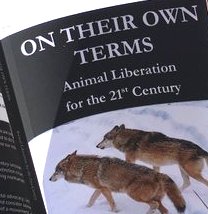
So we focused on the subtitle and reasons to recharge the phrase animal liberation.

Discussions of rights so often veer into questions about who qualifies. We laud certain animals for demonstrating (often at great cost to the animals themselves) that they can decipher and respond to our cues, or adapt to our domestic environments, or act like us. Our assessments of what animals deserve can trap them again. As Catharine MacKinnon observed more than a decade ago, the model that “makes animals objects of rights in standard liberal moral terms—misses animals on their own terms.”

And lately I’ve beenKai and Candice leaning to liberation as our real objective: it evokes those living on nature’s terms, autonomous, free.
We can credit Peter Singer as a catalyst for a rising conversation, in the English-speaking world, of animals’ interests and human responsibility. Singer personally underscored this in the New York Review of Books three decades after having published Animal Liberation.

The thing is, the theme of Peter Singer’s 1975 book was not so much liberation as pain management.
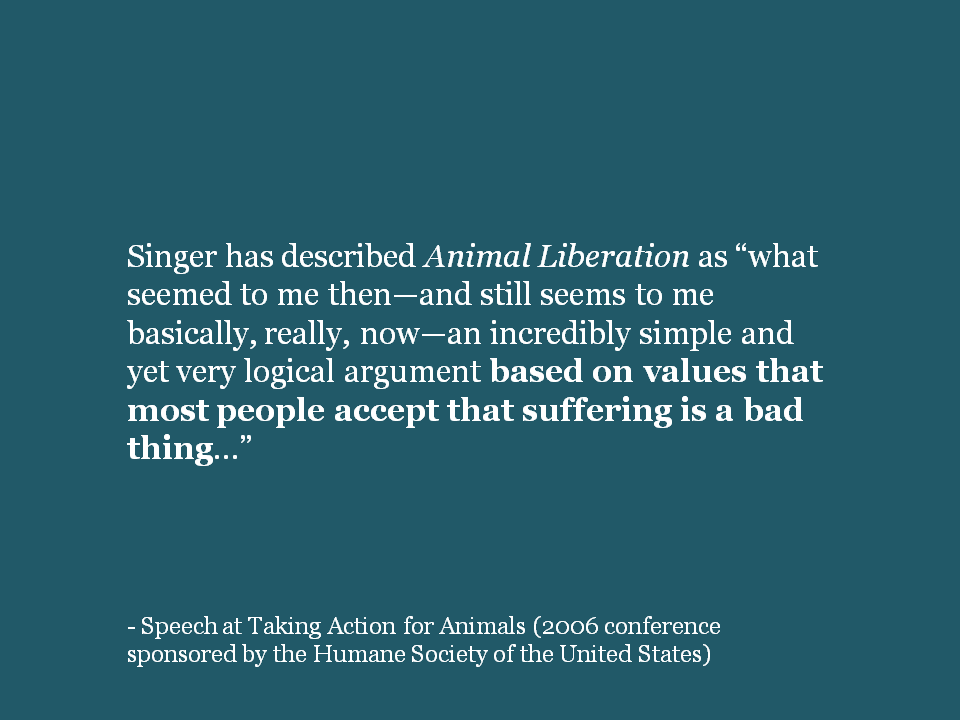
Slide4

To Singer, Animal Liberation promotes a principle that most people already accept: we should minimize suffering. This became the keynote argument for the animal-rights advocacy that followed.

The next slide, quoting Singer at Taking Action for Animals (sponsored by the Humane Society of the United States, 2006), highlights a point of contention. While many advocates agreed with Singer’s opinion that pain sensitivity is what draws our ethical consideration, some wouldn’t wave off our role in their deaths this readily. Slide5

Many advocacy groups followed Singer, though, and never established precepts against killing. The Animal Legal Defense Fund wrote up a Bill of Rights for Animals that accepts killing though livestock must be stunned into unconsciousness prior to slaughter.
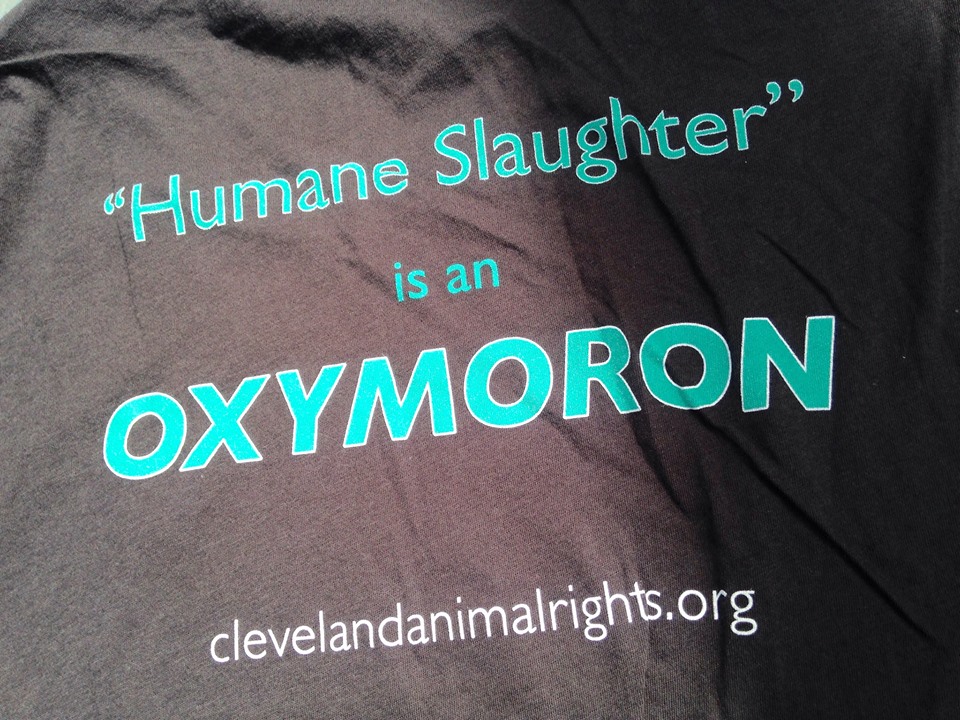
Humane slaughter is an oxymoron

Yes!

The idea that causing a conscious being’s death is allowable under the “liberation” banner is bizarre, yet taken for granted in a lot of advocacy. To this day, exposés don’t decry the killing so much as the way animals are killed.

Peter Singer’s “equal consideration” for nonhuman interests will essentially regard animals as containers of pain and pleasure. To cut down on the most suffering, the activist is urged to oppose glaring abuses in animal husbandry. Here’s the point as originally stated in Singer’s Animal Liberation:Slide6

To a large extent, even rights advocacy (while taking great pains to differentiate itself from Singer’s brand of utilitarianism) reflects Singer’s model.
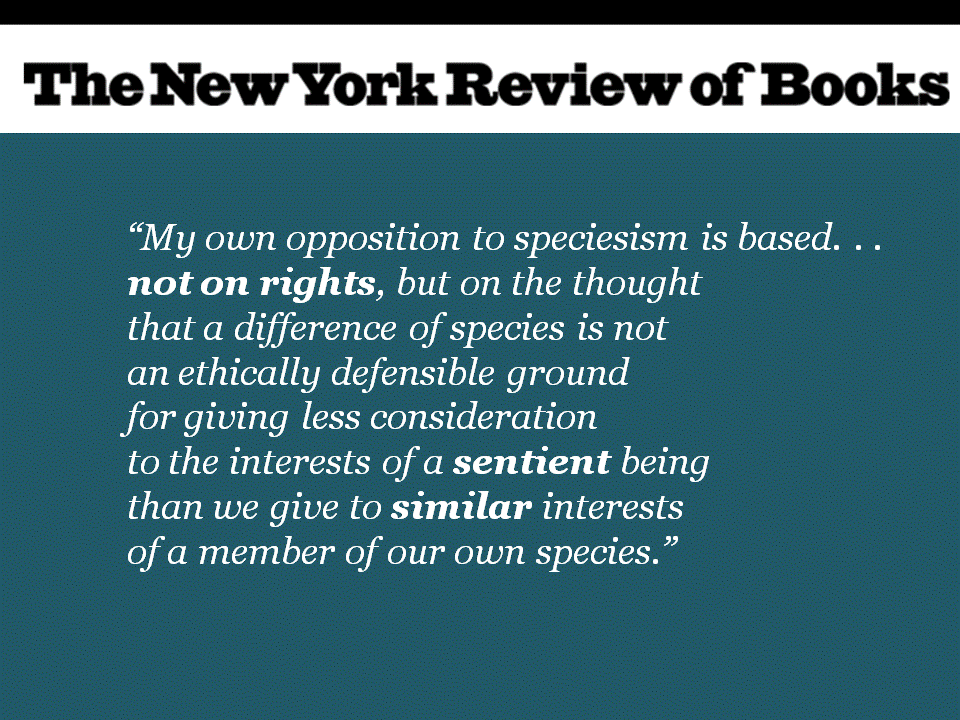
Slide8

– Peter Singer. nybooks.com/articles/2003/05/15/animal-liberation-at-30/

Singer, who wrote Animal Liberation during a key decade for human equality movements, says equal consideration ought to be extended to nonhuman animals. But according to Singer this consideration will only the cover interests we deem similar to those we seek to protect for ourselves.

This might seem logical on its face, but I’m not convinced it’s a fair (or even relevant) way to judge the interests of other animals who have no need for our assessments.

Nautical Dogs and Sterile Deer

Animal-advocacy theorists have presented hypothetical emergencies to justify our preference for putting humans first. Picture a lifeboat that can’t carry an entire group of humans and a dog to safety. Who gets to stay in the boat?

Tom Regan’s Case for Animal Rights came out in 1983. In Regan’s version, the dog loses. Regan assigns a human and dog equal moral significance: we all experience our lives. Yet Regan distinguishes the value of the lives lived by the humans and dog from the value of beings themselves. And then allows the sacrifice of any number of dogs to save the human. Slide10
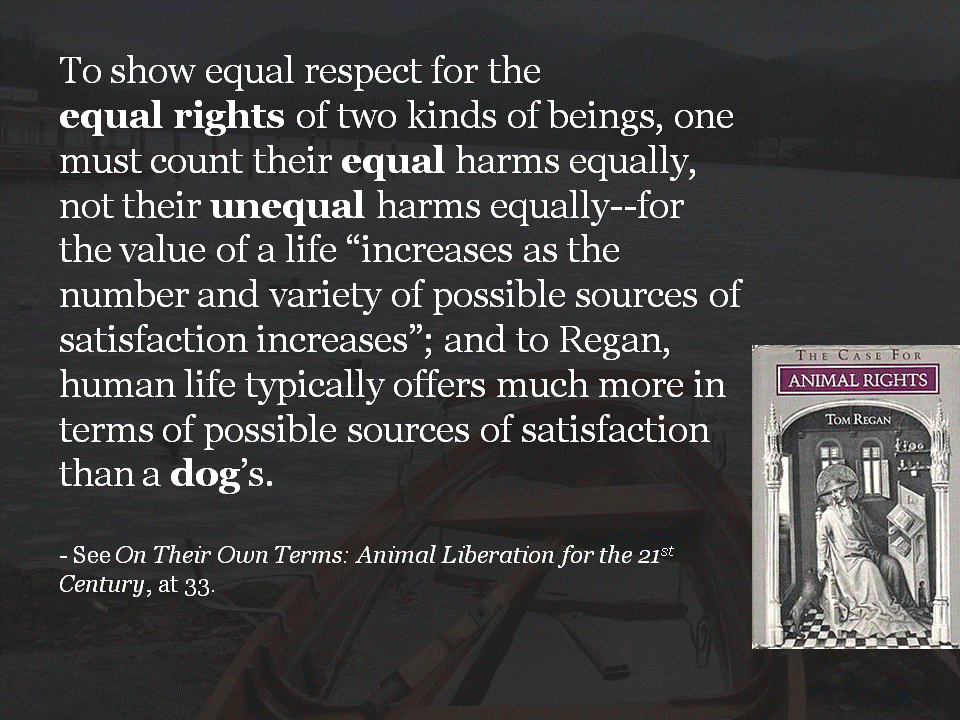
This assertion was repeated quite recently by Gary L. Francione and Anna Charlton, who, in Eat Like You Care: An Examination of the Morality of Eating Animals (2013), say they “will not challenge these widely-shared moral intuitions” that “may tell us that in situations of genuine conflict between humans and animals, humans win. But our intuitions also tell us that in situations in which there is no conflict, we cannot inflict suffering on animals simply because we get enjoyment from doing so.”

Here’s the message the 21st century is sending to animal advocacy: There is hardly any uncontested space on this planet. There are more than seven billion of us, and everywhere, humans are “winning” while everyone else is disappearing.

People now impose contraception on deer so we can CLE Leespread ourselves out without having to deal with the “conflict” of animals in our way. Or we oust untamed animals in the name of human rights. In India, a Tribal Rights Bill was introduced to redress discrimination by allocating land to several million indigenous forest-dwellers—while annihilating the region’s last few hundred tigers. Is erasure of tigers acceptable because the tigers would have had less possible sources of satisfaction than the indigenous people? Or does ethical decision-making require a thought process more complex than that?

Under new global climate patterns, lifeboat scenarios will happen a lot. Environmental crises are unfolding more quickly than could have been predicted when many animal-rights texts were written.

Chapter Nine of On Their Own Terms: Animal Liberation for the 21st Century reviews advocates’ agreement to control the fertility of free-living animals over the years. In 1975, Singer suggested that animals have an interest in our research and development of fertility control over free-living communities.Slide16
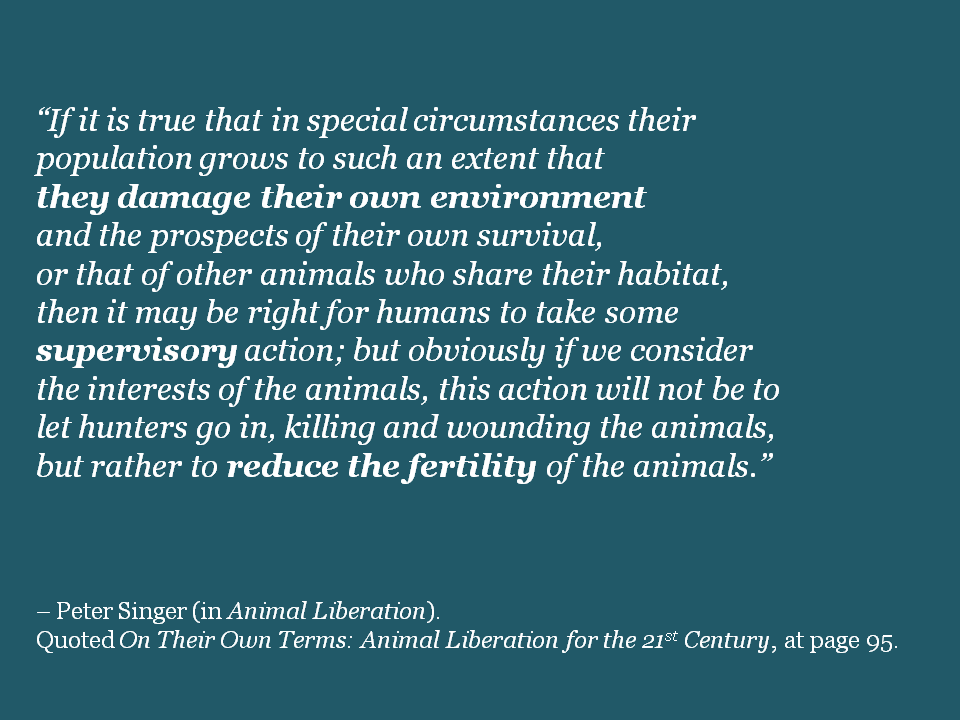
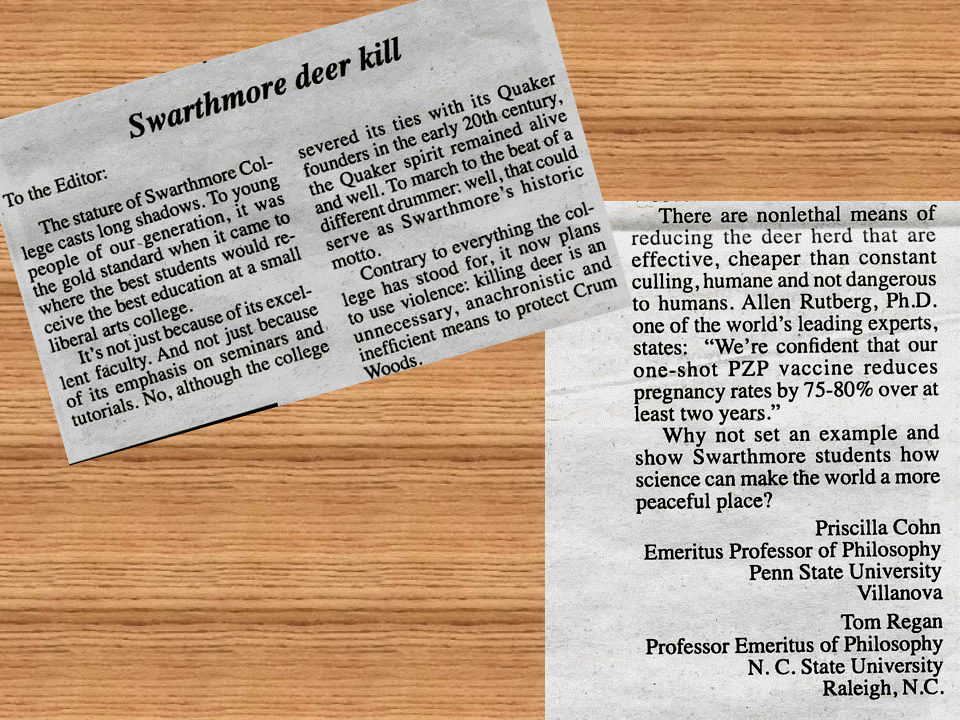
The assumption that free-living animals might wreck their environment and need us to step in as supervisors matches the claims of administrative officials ready to lower the boom on animals in woods, parks, and fragments of green space. In 2008, when deer were targeted near Swarthmore College in Pennsylvania, rights advocate Tom Regan accepted the premise that the local deer must be controlled, but argued that it should be done by pharmaceutical means. The contraceptive substance porcine zona pellucida (PZP), made from the membranes of pig ovaries, triggers the deer’s immune system, forcing the body to attack the deer’s own eggs.
Slide17

The Swarthmorean, 18 Dec. 2008

Regan’s position startled and disappointed me—for Regan’s book The Case for Animal Rights had urged: “With regard to wild animals, the general policy recommended by the rights view is: let them be!” But support for human-controlled reproduction in free-living communities had precedent in animal-rights legal work. In the 1990s, Gary Francione and Anna Charlton, on behalf of their Animal Law Project at Rutgers, explained their action on behalf of Pity Not Cruelty, Inc. to change deer-control policy in Montgomery County, Pennsylvania:

“We are assisting the plaintiffs in the Lower Merion challenge in the dissemination of information concerning non-lethal methods to decrease any deer/human conflicts, including the possible use of immunocontraception where the deer population can be verified to have increased considerably.”

This presents the deer’s very act of reproducing as a possible situation of true conflict. The stance ignores the obvious—balancing the deer population isn’t up to humans; it’s the role of native carnivores and omnivores.

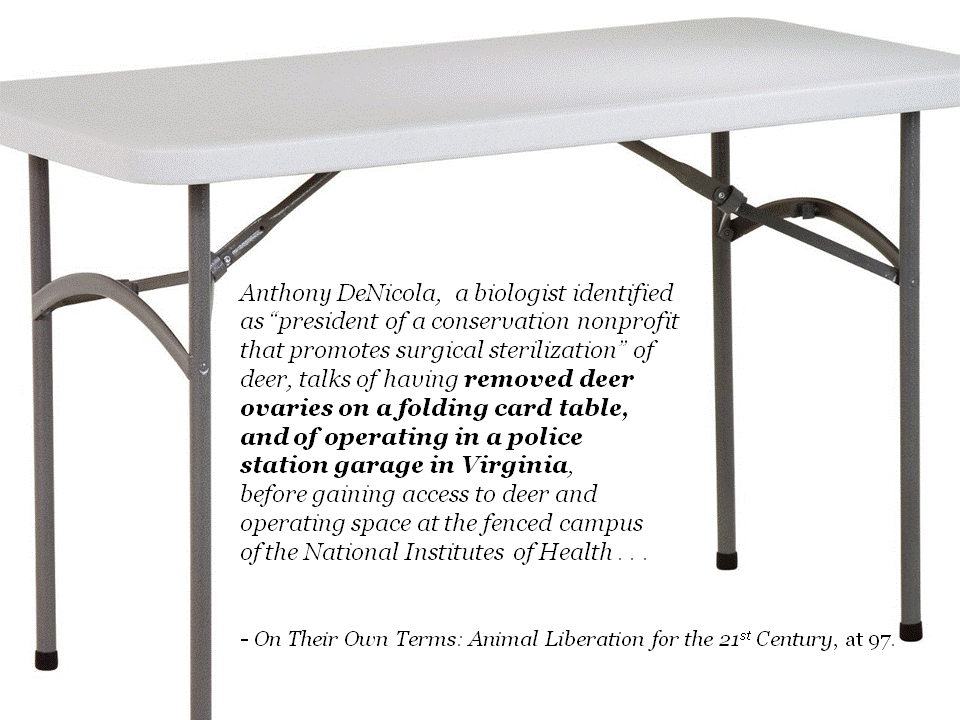
Today, communities are demanding the systematic spaying of deer.
Slide20

A liberatory theory ought to call for the neutering of cats (TNR) or to prevent dogs from mating, they already lack the ability to reproduce and raise their young on their terms. Phasing out the breeding of animals as pets would, essentially, put wildcats and wolves off-limits to selective breeding to suit our whims. But contraception for free-living animals is animal control—nothing more, nothing less. Note the importance of distinguishing selectively bred animals from communities of animals who could actually experience autonomy, and shouldn’t be denied that opportunity.

I’ll let the next slide speak for itself.

Slide21

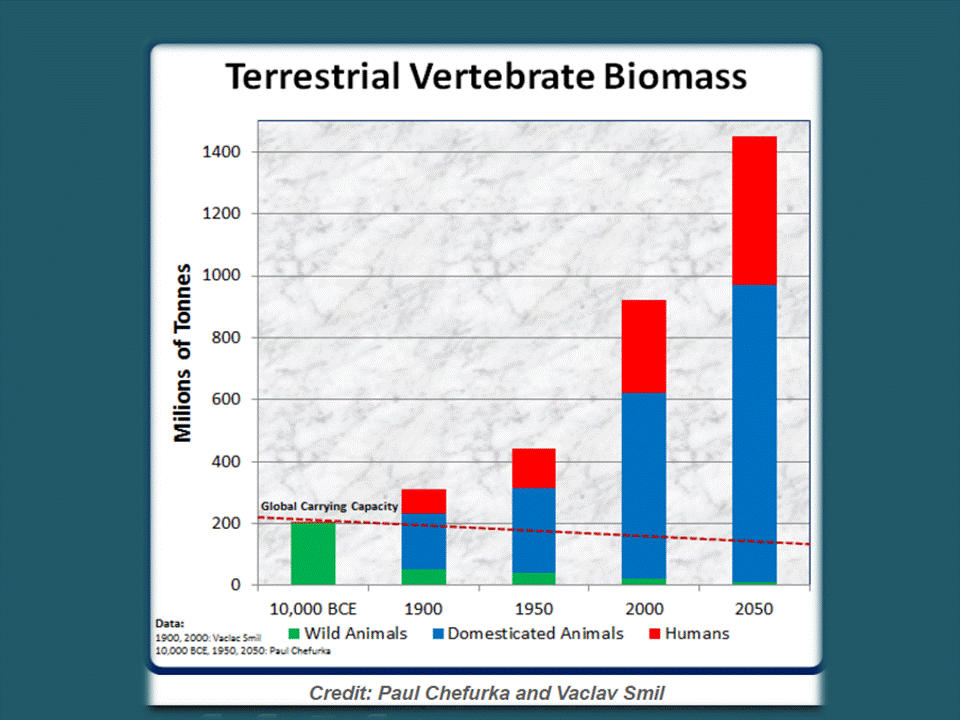
But for context, let’s talk about how much room we take up on this planet, thanks to some work made available by Californians for Population Stabilization.

Slide22Humanity’s mass (we’re the red bar segments in the next chart) has eclipsed the collective weight of all Earth’s free-living land mammals (green segments).
Slide24

Add to this the weight of our entourage of purpose-bred animals (blue segments).

Witness our expansion as we press the rest of Earth’s bio-community off the chart.

Can we so readily accept the claim of “too many of them”?

Shoppers gonna shop. Can we accept that some (really fancy) husbandry improvements support the liberation mission, sort of?

OK, let’s look at an e-mail I received from Whole Foods Market in London on 15 April 2016, just one week before Earth Day. Slide25It says…

“While organic dairy cows yield on average a third less than intensive production, the benefits of organic dairy are huge. In order for a dairy to achieve organic certification the herd must be pasture-grazed throughout the grazing season.”

The cows are on pastures (read: sprawl – and let’s explain it as such to our shopping friends), and they only “yield” a third of what densely confined cows produce. So, if all the cow’s milk shoppers switched to organic, they’d effectively demand three times as many cows? Look at these cows.

The next slide joins the two above advocacy positions: (a) constricting the populations of free-living animals, and (b) allocating more space to animal husbandry. Both positions, and certainly the two combined, support human claims to habitat and, in turn, the disappearing of the untamed.

Slide27

Both campaigns arguably advance ye olde humane-treatment principle “based on values that most people accept” but neither supports true animal welfare. The vegan response to these campaigns is non-participation. (That doesn’t mean doing nothing! We need to give our active support both to vegan-organic farming and predator coexistence initiatives.)
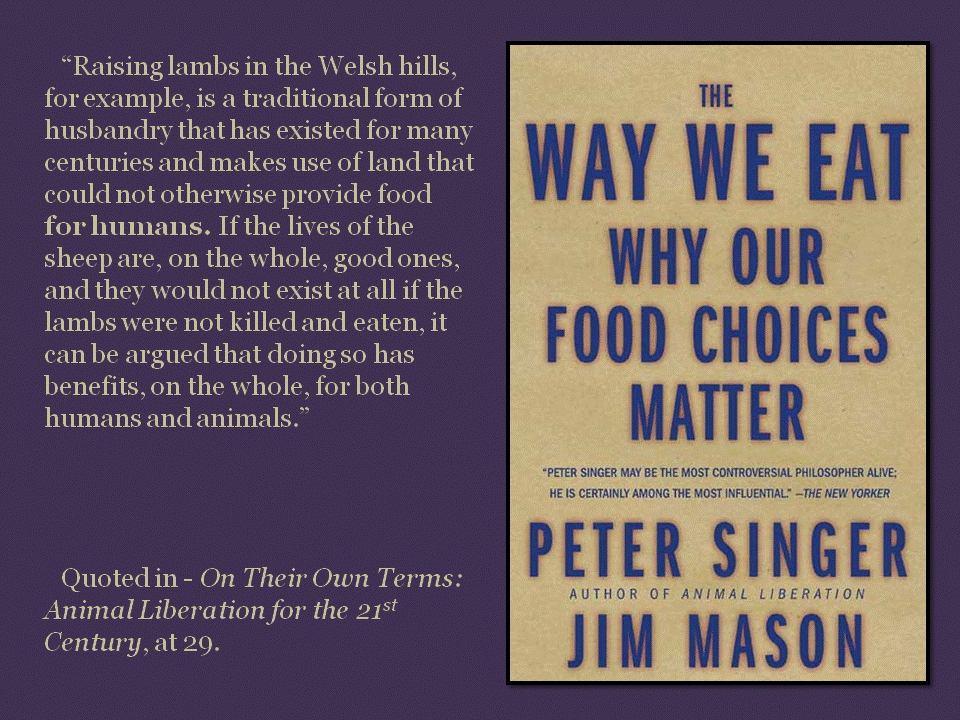
Slide31Peter Singer and Jim Mason, in The Way We Eat: Why Our Food Choices Matter, suggest animal husbandry could be a beneficial system for the animals involved. Hogwash. The hills were the habitat of wolves and wildcats before we came in with our animal husbandry.

As for an incremental step on the way to rights for animals, let’s be clear: no improvement in the conditions for purpose-bred animals cuts the mustard. The more connected to nature the farm is, the more reasons for the farm owner to set traps or call the “nuisance control” professionals.

Free-living animals lose where they’re overlapped by controlled ones, as the owners continually introduce problems into habitats.

Slide34

No authentic rights await purpose-bred animals; the concept is an absurdity we can accept only as long as we accept purpose-breeding.

Cultivating Active Respect

One rights scholar has said: “If we are going to make good on our claim to take animal interests seriously, then we have no choice but to accord animals one right: the right not to be treated as our property.” Will this resolve all the problems?
Slide36

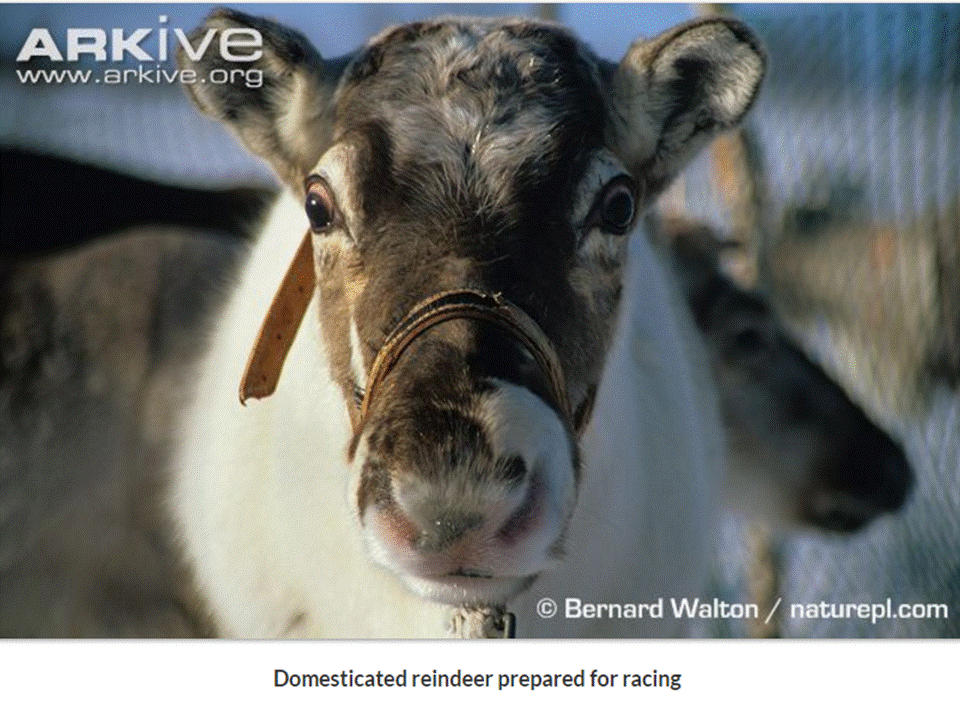
Reindeer were domesticated back in 14000 BC; dogs were bred from wolves about 13000 BC—long before modern conceptions of rights and property.

Because domination is a deeper, broader problem than property status, we’d best think of abolitionism—the call to stop treating animals as commodities—as a component of animal liberation. We’ve got to get over our practice of warring against other beings, displacing them, hijacking their reproduction and demolishing their spaces. Authentic animal-liberation theory conceives of affirmative action to facilitate animals’ flourishing on their own terms. This means cultivating active respect for animals’ connections with their own communities, for their interests in the climate, in the land, water, and air they require to experience freedom.

Slide37And while the interest in shifting other animals’ legal status from property to person is worthwhile, the outcome will be limited if we base our claims on their remarkable abilities to adapt to human environments. Or if we focus on pain control. Slide38
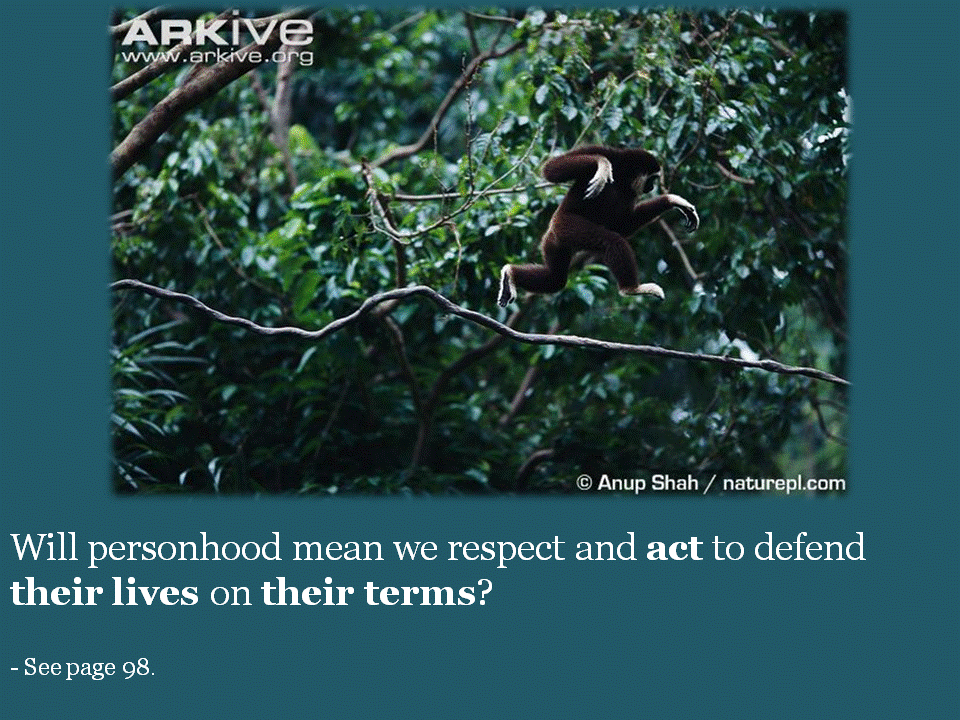
The argument for nonhuman personhood, in the 21st century, will defend the life experiences for which animals themselves evolved, free from our assessments or supervision.
CLE convenors

Thank you . . .

to Cleveland’s vegan community for encouraging this exploration of our movement and the writing of the book itself. Having a launch date helped to move the new work from a computer file to a book! Bill, thank you for choosing the graph slide and explaining its elements during the presentation. Thanks to all our animal writers, including those not mentioned and those critiqued here, for their contributions to the advocacy dialogue. This writing is not an attempt to compete or compare. It’s intended, in the vegan spirit of collective progress, to help refine our wayfinding, knowing that involves dynamic and sometimes knotty discussions.


Photos of the Earth Day Celebration and book launch in Cleveland Heights courtesy of the Cleveland Animal Rights Alliance. THANKS TO ARKIVE.ORG FOR OFFERING A HUB FOR PHOTOgraphers of animals in Habitat, and encouraging the sharing of these images. Encampments meme: Tiffany Warner on PINTEREST, Pinned from KnowYourMeme.Com
In Print

My new work On Their Own Terms: Animal Liberation for the 21st Century is now in print as a paperback.

One aspect of the book I’d like to mention here is the decision to reclaim the “animal liberation” idea.

I was trained as a legal thinker. For years, no wonder, I liked the term “rights” as a signal of serious consideration and respect for the interests of non-human animals. To declare our support for “rights” meant we weren’t satisfied with an anti-cruelty tradition that accepted the habit of forcing other animals to conform to human purposes, as long as we abided by some set of “humane” standards.

But of course the nonhuman communities do not themselves construct rights; we do.

Perhaps the question of animal rights ought to be reversed, and examined with regard to ourselves: Should humans have the right to domesticate other animals?

Photo credit: Suzannah Troy

Photo credit: Suzannah Troy, New York City

To make them dependent on us?

Should we be so entitled? Why?

A questioning of that entitlement is key to an authentic call for liberation. The 1970s conception of “animal liberation”—which still influences major campaigns of high-profile charities—by-passed that question, and in some ways even assumed that animal control in nature is a good thing. The serious effects of “missing animals on their own terms” could do with a reversal, today.

To find the book where you are, please look:

The “Look Inside” function is enabled so you can browse some of the interior.

matt shaw says the book examines “crucial points that other vegan/animal rights/animal liberation writers have either overlooked or shied away from.”

It does. And I hope the ensuing thought and conversations will take these points further, into the policy sphere, and ultimately renew and strengthen public interest in the idea of animal liberation.

With love,

Lee.

Floor Show: Looking Back on the Newkirk Biopic “I Am An Animal”

How time flies. I Am an Animal: The Story of Ingrid Newkirk and PETA (Stick Figure Productions for HBO®, a division of Time Warner) is now eight years old. Its website labels it “unavailable” (though it can still be found).

Yet a biopic of Ingrid Newkirk, president of People for the Ethical Treatment of Animals (PETA) since its founding in 1980, remains significant in the story of animal advocacy. And this film speaks to an ever-relevant topic: the effects of emotionally charged rhetoric and images of animal abuse. As I’ve noted at the Species and Class blog, many animal charities employ graphic video footage of industrial animal handling. I’ve also briefly noted this in the newly published On Their Own Terms: Animal Liberation for the 21st Centuryciting this biopic. Here, then, is a brief exploration of the biopic and what it might tell us about popular advocacy.

I Am an Animal begins by recounting Newkirk’s role in the documentation of animal handling in a Maryland primate laboratory, focusing on filth and untreated wounds, and the subsequent prosecution, which got attention “like no other anti-cruelty group had done.” Newkirk, who was a Maryland law enforcement officer and a director of animal cruelty investigations in Washington, D.C., had found a calling. PETA was born.

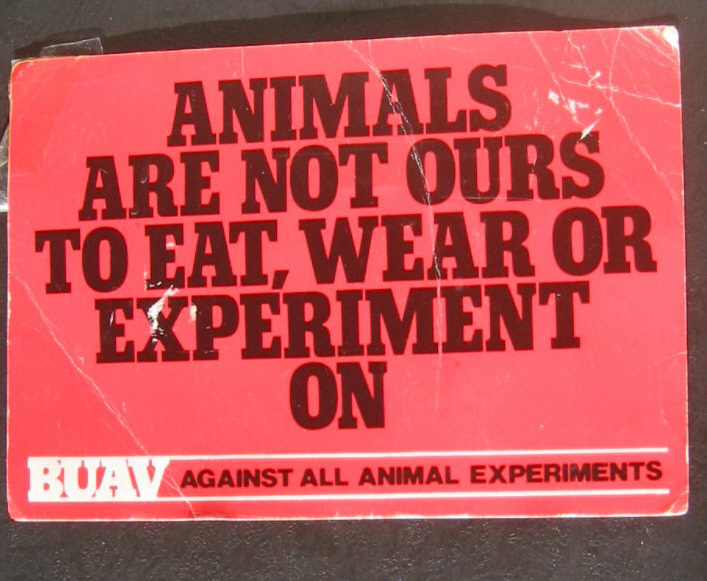
Early in the film Newkirk invokes the day when everyone will think animals are not ours to eat, wear or experiment on, borrowing a slogan then associated with the British Union of the Abolition of Vivisection (BUAV), whose simple magazines and straightforward messages PETA closely mimicked in the early eighties. By the nineties, PETA’s magazine had gone glossy, and high-profile media stunts became the group’s hallmark.

A well-known slogan usually associated with PETA originated with the British Union for the Abolition of Vivisection. Here it is on a post card sent to me by the first vegan I ever (knowingly) met, Robin Lane.

A well-known slogan usually associated with PETA originated with the British Union for the Abolition of Vivisection.

I PROVOKE, THEREFORE I AM

According to filmmaker Matthew Galkin’s Press Notes: “PETA is aggressive and its marketing tactics are obscene and offensive to a lot of people. Yet Ingrid has grown PETA into the largest animal rights group in the world.”

As for the “obscene and offensive” Newkirk explains: “Everybody is obsessed with sex and obsessed with violence”; so PETA’s choice “is no attention or some attention.” Galkin introduces the audience to PETA’s Milk Gone Wild, a rejected Super Bowl anti-milk video. Remember that one? PETA promoted it by exclaiming: You won’t BELIEVE what we’ve packed into this video! You’ll see the HOTTEST girls baring it all – AND MORE!!! No rules, no parents, no limits, and of course no cows. The sexism has continued for years in PETA’s public campaign designs: the need to be “edgy” supposedly dictates sexual objectification and even jokes about gendered violence.

Another of Galkin’s scenes has Newkirk reviewing a staffer’s proposal for PETA’s Animal Liberation (“Are Animals the New Slaves?”) display, juxtaposing pictures of a hoisted steer and a lynching. When a media-relations employee asks if the slavery exhibition should avoid the use of Holocaust images, Newkirk says it would be fine to use them as well, especially if they happened to find a “super-duper one.” In this film we learn a lot about how it became accepted, and then routine, for campaigners to replicate the traumas of subjects – human or not – who can’t consent to being displayed as victims. Today, this routine is confronted by writers such as Claire Heuchan at Media Diversifiedobserving that “Black experience is regularly placed on a par with animals as a provocation.”

JUST A THING

Newkirk’s home – perhaps to the surprise of viewers who associate advocacy with rescue – isn’t shared with any other animals. Newkirk says people “should work to help them” and not “accumulate them” – neglecting the reality of homeless domesticated animals as our refugees, our asylum seekers.

Newkirk’s “work to help them” includes killing, as the film then shows. In North Carolina, Newkirk approaches an underfed dog. “You look like like a sorry soul!” Newkirk quizzes the owner quickly, several times interrupting the answers, then sets down a bowl of food and tells the owner, a soft-spoken person with dreadlocks, that the dog has a serious case of worms. After offering the owner free veterinary care – “We have to sign him over for that. Let me get my clipboard” – Newkirk takes the dog.

In the van, Newkirk comments, “He’s just a thing. He’s one more thing that they have, I think. Sort of a passing nice idea, you’ve got yourself a pet. But the reality of care is – not understood.” Yet the ultimate proof that you’re a “thing” is that somebody can destroy you. And this is exactly what Newkirk proceeds to do. At PETA’s headquarters, where the dog is found to have an abnormal red blood cell count in addition to worms, Newkirk directs an employee to kill the dog. No one tries to communicate with the dog’s owner in more than the authoritative language of the expert assuming control. PETA’s dual message is clear: Some people shouldn’t have animals. Advocates perform a lethal kind of sanitation role.

THE KILLING FLOOR

Then we watch the filmmaker filming another filmmaker. Chris, a young PETA employee, is tapped to videotape a ConAgra site where turkeys are slaughtered for the Butterball brand. On the killing floor – where, from dawn to dusk, a four-person team works the shackles to process some 50,000 bird into bodies every day – Chris breaks down and can’t run the hidden camera. Galkin’s crew films the two-month period in which Chris descends into despair.

Though Chris’s constant technical failures suggest a gut resistance to an active role in violence, Newkirk is not impressed. “We can’t afford to just lollygag around with some young person who can’t get their act together .” By failing to produce what Newkirk wants, “he’s screwing the birds over.”

A more experienced infiltrator is deployed to catch the company’s violations of the Arkansas anti-cruelty statues and the Poultry Inspection Act. A press conference is planned. Whereas Newkirk says footage of abuse has the potential to change the world, the group doesn’t challenge the agricultural use of birds or animals generally; the articulated idea is to score a victory with a big company, and on the grounds that workers in the investigated plant have inflicted “gratuitous” harm. Butterball assures PETA that if there is any abuse found, they’ll fire the employees responsible.

PETA’s street campaigners then convey PETA’s mixed message: “Like a free DVD?” “Boycott Butterball; we found them molesting birds at a processing plant in Ozark.” “Go vegetarian this holiday, but at the least don’t support Butterball.” So, what does animal advocacy want?

WHAT’S IT ALL ABOUT?

When Newkirk hugs a designer who promises to use no wool in a coming season, fashion mogul Marc Bouwer qualifies the vow as meaning products of the Australian Wool Industry – a particular business group PETA has targeted. “We definitely won’t use wool from Australia, that’s for sure!”

Again, what does animal advocacy want?

Newkirk’s PETA, for all its brashness, can’t give a clear response. The PETA website suggests that a “perfect world” of freedom for horses isn’t possible, so just don’t use whips and spurs, for “gentle methods can be employed to teach a horse to allow a rider on his or her back.”

Newkirk states that PETA’s “main goal is to stop suffering, as much suffering as we possibly can” but isn’t too interested in animals living in their free, uncontrolled states. When a staffer shows Newkirk footage of a person hitting tigers, Newkirk first says, “Do we have more of this?” and then stops short. “I am deeply worried,” Newkirk says, “because we keep doing these investigations into exotics, and it’s all worthwhile…but the one thing that everybody needs to get involved in is empathy with the animals they eat and don’t think twice about”; and attention is redirected to assembly-line turkey processors. Then, evidently lumping all undomesticated animals into a cute class, Newkirk says, “All animals feel – not just the cute ones with the big eyes, not the fluffy bears, and the smiley dolphins, but all the animals.”

But animal liberation isn’t a movement to make conscious beings feel better in captivity. It involves opting out of animal agribusiness, not ensuring workers follow the Poultry Inspection Act; it means advocating for the interests of free-living animals and defending the habitat they require to experience their lives. And it means careful attention to root causes of social inequality, not generalizing about, and policing, the financially poor.

Amidst today’s social-movement dialogue, with its attention to intersectional critiques of objectification, and on today’s Earth, with human domination driving mass extinctions, nearly every aspect of Newkirk’s focus is gravely obsolete. Would someone like to explain, then, why its base of financial support is ever increasing?

New Book on Animal Liberation Now Available

I’m pleased to report that On Their Own Terms: Animal Liberation for the 21st Century is now available. 

UPDATED LINK: Here is a summary and audio files.

Carolyn Bailey of AR Zone has called it “one of the most important books on animal activism for a long time” (cheers, Carolyn!) and I hope friends at Vegan Place will find it worth your valuable time.

Let me know what you think. Love & liberation,

Lee.

Coming Soon…New Book on Animal Liberation

Readers of VeganPlace and my fellow bloggers will, I hope, be excited to know that I’m making a debut as an “indie” by way of Kindle Direct Publishing. The new work, for which VeganPlace will become a discussion platform, is just days away from publication. This week, I’ll announce the Kindle link, price, and so forth. It might be free for the first five days, and in any case it will be under a tenner.

And COVER jpg fileI’d love for you to read it and review it. Writing a review will be the single most helpful thing you can do to support this work, beyond reading it. Keep in mind that this is a book by an indie vegan author, not an e-pub ninja; so don’t expect technical perfection on the first go. The e-publication phase has been much more difficult than I’d expected. The information technology-loving Cathy Burt has stepped up at the eleventh hour to work out a few glitches, although, given our time limitations, a paragon of production is not a reasonable goal. We’re learning as we go.

As for the substance, you might well ask what makes this new book worth your time. I believe the concept of animal liberation has never been more relevant, but…that concept is due for renovation. On Their Own Terms: Animal Liberation for the 21st Century updates the idea of animal liberation, as it explores the hits and misses of animal-rights and environmental advocacy, and presents a brief guide to the burgeoning vegan movement.

And why would I say a new animal-liberation philosophy is so important? Look at the way world leaders are now reacting to weather and climate dynamics. Finally they are reacting, but that’s basically to figure out how we can keep doing what we’ve been doing in supposedly “sustainable” ways. Until we redefine our role within Earth’s great biological community, the changes we find ourselves forced to accept will mean coping with one emergency after another.

Animal liberation should come to the fore during discussions of “sustainable” gatherings and products. Promoters of sustainable animal agribusiness or sustainable meals made with local vegetables and flesh of pigs, cows, or fish purchased from small farms or local waters don’t usually want to talk about animal liberation. It is important to meet these organizers where they are: to acknowledge their concern about a topic of great importance, and then to direct their attention to the question of whether their unspoken ethic of human dominion is sustainable.

On Their Own Terms: Animal Liberation for the 21st Century offers ways of uncovering our personal connections with the current climate and extinction crises. It explores the human potential to fit our own habitat, while allowing nonhuman communities to thrive in theirs.

Consider that a transformation of our human identity will spare us, and every other biological community on Earth, from enduring an endless string of gradually or abruptly worsening emergencies whose roots we fail to address. Consider, if you will, relinquishing the human assumption that the Earth is ours…


“I believe Lee Hall is one of the most interesting and insightful writers working in animal rights. This book gets all the thumbs-up.”

— Jonathan Hussain, rescuer and campaigner, Grass Valley, California

“In On Their Own Terms: Animal Liberation for the 21st Century, Lee Hall reclaims the concepts of animal liberation, animal rights and animal welfare, and compels us to reimagine what it means to be an animal activist.”

— Sangamithra Iyer, Satya Magazine